
Mining operations depend heavily on conveyor systems for the continuous movement of bulk materials. Conveyor belts are widely used in coal mining, iron ore mining, gold mining, copper mining, limestone mining, quarrying, mineral processing, cement plants, power plants, ports, and bulk material handling industries.
Selecting the right conveyor belt for mining applications is very important because the wrong belt can lead to frequent breakdowns, belt damage, material spillage, production loss, safety risks, and high maintenance costs. A properly selected mining conveyor belt helps improve productivity, reduce downtime, and increase the overall life of the conveyor system.
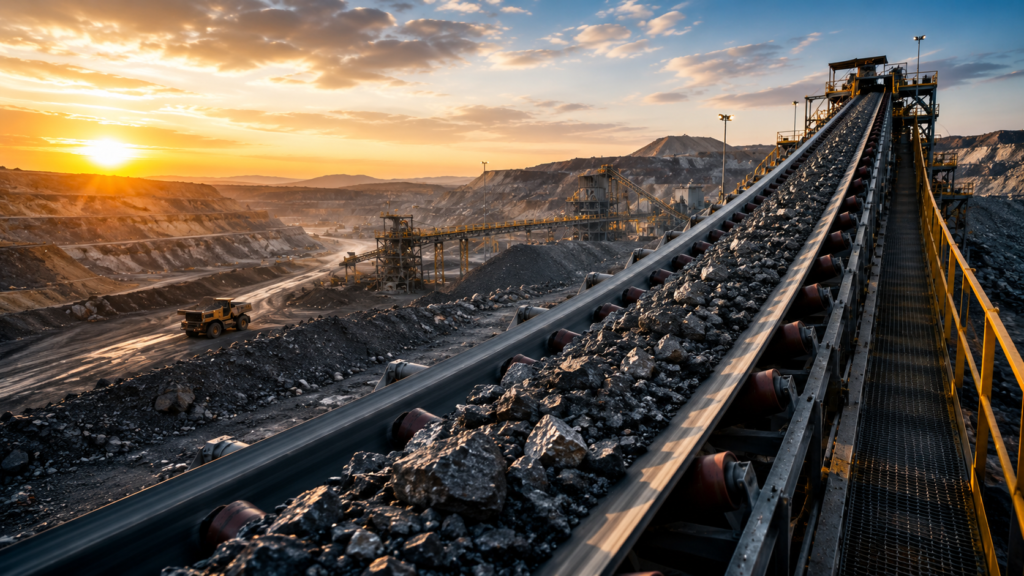
Why Conveyor Belt Selection Matters in Mining
Mining applications are much more demanding than normal industrial applications. Conveyor belts in mining often carry heavy, sharp, abrasive, and high-volume materials over long distances. These belts may operate continuously under tough working conditions such as dust, moisture, impact loading, heat, and outdoor exposure.
The right conveyor belt helps to:
- Improve bulk material handling efficiency
- Reduce unexpected plant shutdowns
- Minimize belt wear and tear
- Improve conveyor safety
- Reduce maintenance cost
- Increase belt service life
- Support continuous production
For this reason, mine operators, procurement teams, maintenance managers, and project engineers should carefully evaluate the technical requirements before selecting a conveyor belt.
1. Understand the Material Being Conveyed
The first step in selecting the right conveyor belt is understanding the material that will be carried. Different materials create different levels of abrasion, impact, cutting, heat, moisture, and dust.
Common mining materials include:
- Coal
- Iron ore
- Gold ore
- Copper ore
- Limestone
- Bauxite
- Aggregates
- Sand and gravel
- Mineral concentrates
- Crushed stone
Important material factors to check:
- Bulk density
- Lump size
- Material abrasiveness
- Moisture content
- Sharpness of material
- Temperature of material
- Dust generation
- Oil or chemical exposure
For example, iron ore and aggregates generally require abrasion resistant conveyor belts, while coal handling applications may require fire resistant conveyor belts. Hot clinker or heated material requires heat resistant conveyor belts.
2. Choose the Correct Conveyor Belt Type
Mining conveyor belts are available in different constructions. The correct belt type depends on load capacity, conveyor length, pulley diameter, application type, belt speed, and site condition.
EP Conveyor Belts
EP conveyor belts are made with polyester and nylon fabric reinforcement. They are commonly used for medium to heavy-duty mining and bulk material handling applications.
EP conveyor belts are suitable for:
- Quarry plants
- Crusher plants
- Cement plants
- Aggregate handling
- Medium-distance conveyors
- General mining applications
EP belts offer good strength, flexibility, low elongation, and reliable performance in many industrial applications.
NN Conveyor Belts
NN conveyor belts use nylon fabric reinforcement. These belts are known for flexibility, impact resistance, and good troughability.
NN conveyor belts are suitable for:
- Mining plants
- Stone crushing units
- Material processing plants
- Bulk handling conveyors
- Medium-duty conveyor systems
Steel Cord Conveyor Belts
Steel cord conveyor belts are designed for high-tension, long-distance, and heavy-load applications. These belts use steel cable reinforcement and are suitable for demanding mining operations.
Steel cord conveyor belts are commonly used in:
- Long-distance mining conveyors
- Overland conveyors
- High-capacity bulk handling systems
- Port and terminal conveyors
- Coal handling conveyors
- Iron ore handling conveyors
For long conveyor lengths and heavy load applications, steel cord conveyor belts are often the preferred option.
3. Select the Right Cover Grade
The conveyor belt cover protects the belt carcass from wear, impact, heat, fire, oil, and environmental damage. Selecting the correct cover grade is one of the most important steps in mining conveyor belt selection.
Abrasion Resistant Conveyor Belt
Abrasion resistant conveyor belts are used when the material is rough, sharp, or highly abrasive.
Best for:
- Iron ore
- Aggregates
- Limestone
- Crushed stone
- Gravel
- Hard minerals
Fire Resistant Conveyor Belt
Fire resistant conveyor belts are used where fire safety is important, especially in coal handling and underground applications.
Best for:
- Coal mining
- Underground conveyors
- Coal handling plants
- Power plants
- High-risk conveyor environments
Heat Resistant Conveyor Belt
Heat resistant conveyor belts are used where hot materials are being transported.
Best for:
- Cement clinker
- Hot minerals
- Foundry materials
- Steel plant applications
- High-temperature process industries
Oil Resistant Conveyor Belt
Oil resistant conveyor belts are used where the material contains oil, grease, or chemicals that can damage standard rubber covers.
Best for:
- Fertilizer plants
- Recycling units
- Chemical industries
- Oil-containing material handling
4. Check Belt Tensile Strength
Belt tensile strength must match the conveyor load, belt length, lift height, drive power, and operating conditions. If the belt strength is too low, the belt may stretch, fail, or require frequent maintenance.
Important factors for tensile strength selection:
- Conveyor length
- Material load
- Belt speed
- Conveyor inclination
- Drive arrangement
- Pulley diameter
- Take-up system
- Starting and stopping conditions
For long-distance and high-load conveyors, steel cord belts are generally suitable. For medium-duty conveyors, EP or NN conveyor belts may be suitable.
5. Consider Impact at Loading Points
Mining conveyor belts often face heavy impact at loading zones. Large lumps of ore, stone, or coal can damage the belt cover and carcass if the belt is not selected correctly.
To reduce impact damage, consider:
- Higher cover thickness
- Stronger belt carcass
- Impact resistant cover grade
- Impact rollers
- Impact beds
- Proper chute design
- Correct loading angle
- Skirting rubber to control spillage
Impact damage is one of the common causes of premature conveyor belt failure in mining applications.
6. Evaluate Conveyor Length and Application Type
Different mining conveyor applications require different belt specifications. A short crusher conveyor may need a different belt compared to a long overland conveyor.
Common mining conveyor applications include:
- Primary crusher conveyors
- Secondary crusher conveyors
- Stockpile conveyors
- Overland conveyors
- Underground mining conveyors
- Port loading conveyors
- Plant transfer conveyors
- Screen feed conveyors
- Reclaimer conveyors
Short and medium conveyors may use EP or NN belts, while long-distance and high-tension conveyors may require steel cord conveyor belts.
7. Check Operating Environment
Mining environments can be harsh. Conveyor belts may face dust, moisture, heat, sunlight, impact, sharp materials, and continuous operation.
Before selecting the belt, check:
- Indoor or outdoor operation
- Surface or underground mining
- Ambient temperature
- Moisture exposure
- UV exposure
- Dust level
- Fire risk
- Chemical exposure
- Maintenance accessibility
A belt suitable for one mining site may not be suitable for another. Site conditions should always be considered before final belt selection.
8. Select the Right Conveyor Components
A good conveyor belt also requires the right conveyor components. Poor-quality rollers, pulleys, scrapers, lagging, or skirting can damage even a high-quality belt.
Important conveyor components include:
- Conveyor rollers
- Conveyor idlers
- Conveyor pulleys
- Pulley lagging
- Belt cleaners
- Impact beds
- Skirting rubber
- Conveyor frames
- Metal detectors
- Magnetic separators
For mining applications, belt cleaners and magnetic separators are especially important. Belt cleaners reduce carryback and spillage, while magnetic separators help remove tramp metal before it damages crushers, screens, and conveyor belts.
9. Review Maintenance and Belt Life
The right conveyor belt should not only match the technical requirement but also provide long service life and easy maintenance. A low-cost belt may become expensive if it fails early or causes frequent shutdowns.
Mining companies should consider:
- Expected belt life
- Ease of splicing
- Repair options
- Availability of replacement belt
- Maintenance frequency
- Downtime cost
- Belt tracking performance
- Resistance to wear and impact
The best conveyor belt is not always the cheapest belt. It is the belt that gives the best performance, safety, and reliability for the specific application.
10. Work with a Reliable Conveyor Belt Supplier
Selecting the right mining conveyor belt requires technical knowledge and practical understanding of bulk material handling systems. A reliable conveyor belt supplier can help review your requirement and suggest the correct belt type, cover grade, tensile strength, cover thickness, and conveyor accessories.
Rubbex Conveyors & Engineering supplies conveyor belts and bulk material handling products for mining, cement, steel, power plants, ports, quarries, crushers, and industrial processing applications.
Our product range includes:
- EP conveyor belts
- NN conveyor belts
- Steel cord conveyor belts
- Chevron conveyor belts
- Sidewall conveyor belts
- Heat resistant conveyor belts
- Fire resistant conveyor belts
- Oil resistant conveyor belts
- Conveyor rollers and idlers
- Conveyor pulleys
- Belt cleaners
- Pulley lagging
- Rubber sheets
- Metal detectors
- Magnetic separators
- Conveyor accessories
Conclusion
Selecting the right conveyor belt for mining applications requires careful study of the material, load capacity, conveyor length, belt speed, operating temperature, impact condition, cover grade, and working environment.
Whether you need a steel cord conveyor belt for long-distance mining conveyors, an EP conveyor belt for quarry applications, a fire resistant belt for coal handling, or an abrasion resistant belt for ore and aggregate handling, Rubbex Conveyors & Engineering can support your requirement with reliable conveyor belt solutions.
If you are looking for a conveyor belt manufacturer or supplier for mining and bulk material handling applications, contact Rubbex Conveyors & Engineering with your belt specification, application details, and quantity requirement.
How to Select the Right Conveyor Belt for Mining Applications
The best conveyor belt depends on the material, conveyor length, load capacity, belt speed, temperature, and operating environment. Steel cord belts are suitable for long-distance and heavy-load conveyors, while EP and NN belts are suitable for medium to heavy-duty mining and quarry applications.
Abrasion resistant steel cord or EP conveyor belts are commonly used for iron ore mining because iron ore is heavy and abrasive.
Fire resistant conveyor belts are commonly used for coal mining and coal handling applications because fire safety is important in these environments.
EP conveyor belts use fabric reinforcement and are suitable for medium to heavy-duty applications. Steel cord conveyor belts use steel cable reinforcement and are suitable for long-distance, high-tension, and heavy-load conveyors.
Yes, Rubbex Conveyors & Engineering supplies conveyor rollers, idlers, pulleys, belt cleaners, pulley lagging, rubber sheets, metal detectors, magnetic separators, and conveyor accessories.