
Australia is one of the world’s most important mining and bulk material handling markets. From iron ore mines in Western Australia to coal operations in Queensland, gold mines, lithium projects, quarry plants, cement plants, ports, terminals, and mineral processing facilities, conveyor systems play a critical role in keeping production moving.
For mining companies, a conveyor belt is not just a consumable item. It is a key part of the production system. If the wrong conveyor belt is selected, it can lead to belt failure, material spillage, unplanned shutdowns, higher maintenance cost, safety risks, and loss of productivity.
That is why choosing the right conveyor belt supplier in Australia is very important for mining companies, quarry operators, EPC contractors, cement plants, steel plants, ports, and bulk material handling industries.
This blog explains what Australian mining companies should check before selecting a conveyor belt supplier.
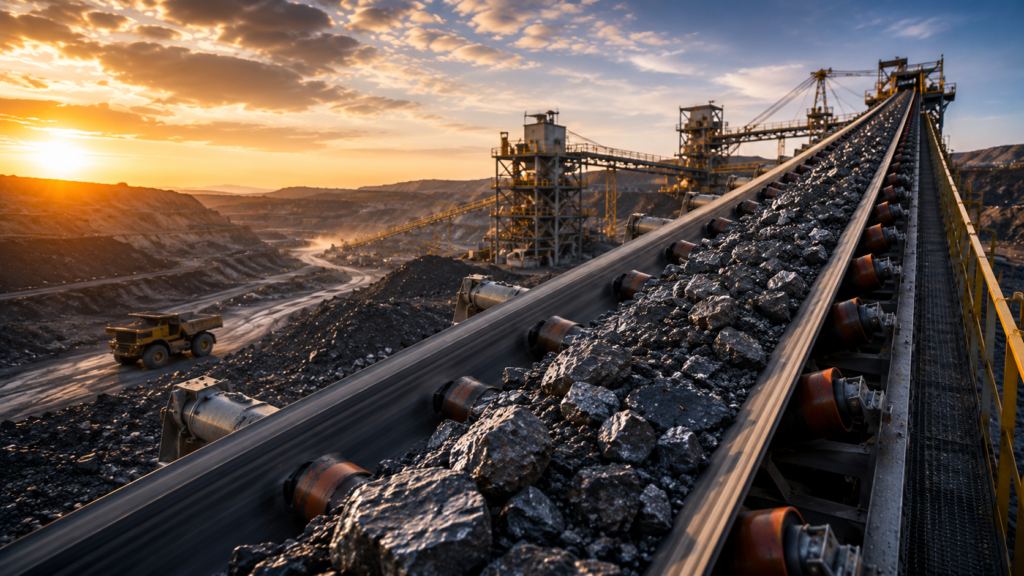
Why Conveyor Belt Selection Matters in Australian Mining
Mining operations in Australia often handle heavy, abrasive, sharp, and high-volume materials such as iron ore, coal, gold ore, copper ore, lithium ore, bauxite, limestone, aggregates, and mineral concentrates.
These materials require conveyor belts that can handle:
- Heavy load capacity
- High belt tension
- Long-distance conveying
- Abrasion and impact
- Outdoor working conditions
- Dust and moisture
- Continuous plant operation
- High safety requirements
- Low maintenance expectations
A reliable mining conveyor belt helps reduce downtime, improve plant efficiency, and support smooth bulk material movement.
1. Check the Supplier’s Product Range
The first thing mining companies should check is whether the conveyor belt supplier can provide the correct belt type for different applications.
A professional conveyor belt supplier in Australia should be able to supply or support:
- EP conveyor belts
- NN conveyor belts
- Steel cord conveyor belts
- Chevron conveyor belts
- Sidewall conveyor belts
- Heat resistant conveyor belts
- Fire resistant conveyor belts
- Oil resistant conveyor belts
- Abrasion resistant conveyor belts
- Food grade conveyor belts
- Conveyor rollers and idlers
- Conveyor pulleys
- Belt cleaners
- Pulley lagging
- Rubber sheets
- Metal detectors
- Magnetic separators
- Conveyor accessories
Mining companies should avoid choosing a supplier only based on low price. The supplier should understand the application and recommend the correct conveyor belt specification.
2. Check Experience in Mining and Bulk Material Handling
A mining conveyor belt supplier should understand the challenges of heavy-duty bulk material handling. Mining applications are very different from light industrial conveyor applications.
The supplier should understand:
- Material type
- Belt width
- Belt speed
- Conveyor length
- Trough angle
- Pulley diameter
- Impact loading
- Cover grade
- Tensile strength
- Fire safety requirement
- Site operating condition
For example, a conveyor belt used in an iron ore mine requires different properties compared to a conveyor belt used in a packaging line or food processing plant.
If your requirement is for mining, quarry, crusher, cement, steel, power plant, or port application, you should choose a supplier with knowledge of heavy-duty conveyor belts and bulk material handling systems.
3. Check Belt Type Based on Application
Mining companies should select the conveyor belt type according to the application.
Steel Cord Conveyor Belt
Steel cord conveyor belts are suitable for long-distance, high-tension, and heavy-load conveyors. These belts are commonly used in large mining projects, overland conveyors, iron ore handling, coal handling, and port conveyor systems.
Best for:
- Iron ore mining
- Coal mining
- Long-distance conveyors
- High-capacity conveyors
- Port and terminal conveyors
- Overland conveyor systems
Keywords: steel cord conveyor belt Australia, mining conveyor belt Australia, heavy duty conveyor belt supplier Australia.
EP Conveyor Belt
EP conveyor belts are widely used in mining, quarry, cement, crusher, and general bulk material handling applications. These belts offer good strength, flexibility, and low elongation.
Best for:
- Quarry plants
- Crusher plants
- Cement plants
- Medium-distance conveyors
- Aggregate handling
- General mining applications
Keywords: EP conveyor belt supplier Australia, conveyor belt for quarry Australia, conveyor belt for crusher plant Australia.
NN Conveyor Belt
NN conveyor belts are known for flexibility and impact resistance. They are suitable for medium-duty to heavy-duty material handling applications.
Best for:
- Mining plants
- Stone crushing units
- Processing plants
- Bulk handling systems
- Medium-duty conveyor systems
Keywords: NN conveyor belt Australia, industrial conveyor belt supplier Australia.
Chevron Conveyor Belt
Chevron conveyor belts are used for inclined material conveying where loose material may roll back on a flat belt.
Best for:
- Sand handling
- Gravel handling
- Coal handling
- Bag loading conveyors
- Mobile conveyors
- Inclined conveyors
Keywords: chevron conveyor belt Australia, inclined conveyor belt supplier Australia.
Sidewall Conveyor Belt
Sidewall conveyor belts are used for steep-angle or vertical conveying where space saving is important.
Best for:
- Mining plants
- Ports and terminals
- Cement plants
- Fertilizer plants
- Processing industries
- Space-saving conveyor systems
Keywords: sidewall conveyor belt Australia, steep angle conveyor belt Australia.
4. Check Cover Grade and Belt Protection
The conveyor belt cover is important because it protects the belt carcass from wear, impact, heat, fire, oil, and chemicals.
Mining companies should check whether the supplier can provide the correct cover grade.
Abrasion Resistant Conveyor Belt
Abrasion resistant conveyor belts are used for rough and abrasive materials such as iron ore, limestone, aggregates, crushed stone, gravel, and minerals.
Best for:
- Iron ore
- Aggregates
- Quarry material
- Crushed stone
- Limestone
- Hard minerals
Fire Resistant Conveyor Belt
Fire resistant conveyor belts are used where fire safety is important, especially in coal handling, underground mining, and power plant applications.
Best for:
- Coal mining
- Coal handling plants
- Underground conveyors
- Power plants
- High-risk conveyor environments
Heat Resistant Conveyor Belt
Heat resistant conveyor belts are used for hot materials such as clinker, hot minerals, foundry material, and steel plant material.
Best for:
- Cement plants
- Steel plants
- Foundries
- Hot material handling
- High-temperature applications
Oil Resistant Conveyor Belt
Oil resistant conveyor belts are used where materials contain oil, grease, or chemicals that can damage standard rubber covers.
Best for:
- Fertilizer plants
- Recycling plants
- Chemical industries
- Oil-containing material handling
5. Check Technical Specification Support
A good conveyor belt supplier should not only sell belts but also help customers choose the right technical specification.
Before ordering a mining conveyor belt, Australian buyers should check:
- Belt width
- Belt length
- Ply rating
- Tensile strength
- Top cover thickness
- Bottom cover thickness
- Cover grade
- Belt construction
- Pulley diameter
- Conveyor speed
- Material type
- Material lump size
- Operating temperature
- Fire resistance requirement
- Belt jointing method
- Packing and shipping requirement
If the supplier cannot understand these technical points, there is a higher risk of wrong belt selection.
6. Check Quality and Testing
Mining companies should always check the quality control process of the conveyor belt supplier.
Important quality checks include:
- Tensile strength test
- Elongation test
- Adhesion test
- Abrasion test
- Hardness test
- Cover thickness check
- Belt width and length inspection
- Fire resistance test when required
- Heat resistance test when required
- Final visual inspection
For heavy-duty conveyor belts, quality testing is important because even a small defect can create a major operational problem at site.
7. Check Availability of Conveyor Components
A conveyor belt performs best when the complete conveyor system is supported with the right components.
Mining companies should check whether the supplier can also provide:
- Conveyor rollers
- Conveyor idlers
- Conveyor pulleys
- Pulley lagging
- Belt cleaners
- Primary scrapers
- Secondary scrapers
- V-plough cleaners
- Impact beds
- Skirting rubber
- Rubber sheets
- Metal detectors
- Magnetic separators
For mining applications, metal detectors and magnetic separators are very important because tramp metal can damage crushers, screens, conveyor belts, and other equipment.
8. Check Supplier Capability for Australia
If you are looking for a conveyor belt supplier in Australia, you should check whether the supplier can support Australian mining and industrial requirements.
Important points to check:
- Can the supplier support mining-grade conveyor belts?
- Can the supplier supply steel cord belts for heavy-duty applications?
- Can the supplier provide EP and NN belts for quarry and crusher plants?
- Can the supplier support fire resistant and heat resistant belt requirements?
- Can the supplier provide technical datasheets?
- Can the supplier support bulk quantity requirements?
- Can the supplier arrange export packing?
- Can the supplier support shipping documentation?
- Can the supplier provide product photos and inspection details?
- Can the supplier respond quickly to RFQs?
For Australian companies, timely communication and clear technical support are important because conveyor belt failure can affect complete production.
9. Check Total Cost, Not Only Price
Mining companies should avoid selecting conveyor belts only based on the lowest price. The cheapest conveyor belt may become expensive if it fails early, causes downtime, or requires frequent replacement.
Instead, buyers should check total cost of ownership.
Important cost factors include:
- Belt life
- Maintenance cost
- Downtime cost
- Splicing cost
- Replacement frequency
- Belt tracking performance
- Resistance to wear and impact
- Availability of technical support
- Delivery reliability
A good quality conveyor belt may reduce long-term cost by improving reliability and reducing plant shutdowns.
10. Choose a Supplier with Industrial Understanding
Australian mining companies need suppliers who understand industrial working conditions, not just product names.
A reliable conveyor belt supplier should ask about:
- What material will be conveyed?
- What is the belt width and length?
- What is the conveyor capacity?
- What is the operating temperature?
- Is the application underground or surface?
- Is fire resistance required?
- Is the material abrasive or sharp?
- Is oil or chemical exposure present?
- Is the belt for new installation or replacement?
- What is the required delivery timeline?
These questions help select the correct belt and avoid mismatch.
Rubbex Conveyors – Conveyor Belt Supplier for Australia
Rubbex Conveyors & Engineering is a conveyor belt manufacturer and bulk material handling solutions supplier serving mining, cement, steel, power plant, port, quarry, crusher, EPC, and processing industries.
We supply a wide range of conveyor belts and conveyor components suitable for demanding industrial applications.
Our product range includes:
- EP conveyor belts
- NN conveyor belts
- Steel cord conveyor belts
- Chevron conveyor belts
- Sidewall conveyor belts
- Heat resistant conveyor belts
- Fire resistant conveyor belts
- Oil resistant conveyor belts
- Food grade conveyor belts
- Conveyor rollers and idlers
- Conveyor pulleys
- Belt cleaners
- Pulley lagging
- Rubber sheets
- Metal detectors
- Magnetic separators
- Conveyor accessories
Rubbex supports customers with product selection, technical guidance, quality-focused supply, and bulk material handling solutions for industrial applications.
Conclusion
Choosing the right conveyor belt supplier in Australia is an important decision for mining companies and bulk material handling industries. Buyers should check the supplier’s product range, mining experience, technical knowledge, quality control, conveyor components, cover grades, and ability to support heavy-duty applications.
Whether your requirement is for steel cord conveyor belts, EP conveyor belts, NN conveyor belts, fire resistant belts, heat resistant belts, abrasion resistant belts, rollers, pulleys, belt cleaners, pulley lagging, or conveyor accessories, selecting the right supplier can help reduce downtime and improve conveyor system performance.
If you are looking for a conveyor belt supplier in Australia for mining, quarry, cement, steel, power plant, port, or bulk material handling applications, contact Rubbex Conveyors & Engineering with your belt size, specification, application details, and quantity requirement.
Frequently Asked Questions
Choose a supplier with experience in mining and bulk material handling, a wide product range, technical support, quality control, and the ability to supply belts based on your application requirement.
Steel cord conveyor belts are suitable for long-distance and heavy-load mining conveyors. EP and NN conveyor belts are suitable for medium-duty to heavy-duty mining, quarry, crusher, and cement plant applications.
Fire resistant conveyor belts are important for coal mining, underground conveyors, coal handling plants, and other high-risk applications where fire safety is required.
Abrasion resistant steel cord or EP conveyor belts are commonly used for iron ore handling because iron ore is heavy and abrasive.
Yes, Rubbex Conveyors & Engineering supplies conveyor belts, conveyor components, and bulk material handling products for industrial customers, including mining, quarry, cement, steel, power, port, and EPC sectors.
You should share belt width, length, ply rating, tensile strength, cover thickness, cover grade, material type, application, quantity, and delivery requirement.